
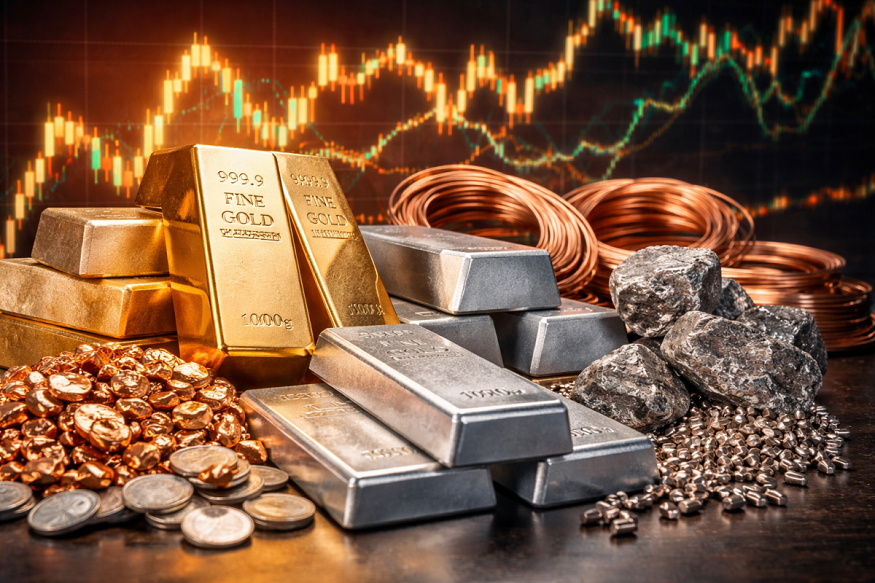
Investors have long looked to gold and silver investment products as a way to add greater resilience to their portfolios. When financial markets become unpredictable, inflation puts pressure on purchasing power, or economic conditions become uncertain, precious metals can provide an alternative to conventional investments. Although gold and silver are commonly associated with jewelry and luxury, their role in the financial world is far more significant. For many investors, these metals serve as tangible assets that can complement stocks, bonds, property, and other investments.
Including precious metals in a portfolio does not mean moving away from traditional investments altogether. Instead, they can provide another layer of diversification, potentially helping investors manage the effects of market volatility and economic uncertainty.
What makes gold and silver attractive investment options
Diversification is one of the fundamental principles of investing. Rather than placing all available capital into one asset or investment category, investors can spread their holdings across different assets. The purpose is to reduce dependence on the performance of any single investment.
Gold and silver investment products can play a role in this approach because their market behavior does not always mirror that of stocks, bonds, or other financial assets. When traditional markets experience periods of weakness, precious metals may respond differently. This difference in performance can help create a more balanced portfolio.
Read More: What Changing European Markets Could Mean for Belgian Households
There has also been growing interest in tangible assets as investors consider how to protect long-term wealth. Unlike many financial products that exist primarily as digital records or contractual claims, physical gold and silver can be held directly. Their value is not based solely on the performance of a particular company, financial institution, or technology platform. Precious metals have also been recognized as stores of value for centuries. Their long history across different economies and periods of financial uncertainty continues to contribute to their appeal among investors seeking diversification.
Inflation can gradually reduce the purchasing power of money. As the cost of goods and services rises, the same amount of currency may buy less than it did previously. This creates a concern for anyone trying to preserve wealth over the long term. Gold and silver are often considered potential inflation hedges because they have historically maintained value across extended periods of changing economic conditions. Their physical nature and limited availability distinguish them from currencies that can lose purchasing power over time.
For investors concerned about rising prices, precious metals can therefore represent one possible way of adding an asset that may behave differently from cash and other currency-based investments. Physical gold and silver bars can be particularly appealing to those who want direct ownership of a tangible asset rather than exposure solely through financial instruments.
Read More: Shopping for the Right Credit Card Processor
Another reason investors consider gold and silver is their potential role during periods of market stress. Stock prices can react sharply to company earnings, economic reports, interest-rate changes, political developments, and global events. Such movements can create significant short-term fluctuations in an investment portfolio. Precious metals can behave differently from equities and other risk assets. During periods of heightened uncertainty, investors may increase their interest in assets traditionally viewed as stores of value. Increased demand can influence precious-metal prices and, in some circumstances, provide support when other areas of a portfolio are under pressure.